Collector research by Alex
Quick answer
Original Mighty Beanz usually refers to the early-2000s Moose Toys line that launched in Australia in 2002 and reached the United States in 2003. Collectors should use copyright marks, original packaging, numbering and shell design to separate these toys from the 2010 and 2018 relaunches.
Key takeaways
- The original line began in Australia before its US release.
- Early releases used numbered characters organized into series and teams.
- Cases, tracks, promotions and Bean Bodz expanded the standard line.
- The phrase original is informal, so listings still need evidence.
- Condition and documentation matter more than nostalgia-based claims.
I’m Alex, the editor of MightyBeanz.info. I use an evidence-first approach: identify the exact release, preserve uncertainty and separate documented facts from seller claims. This independent guide is not affiliated with Moose Toys or other trademark owners.
| Release era | Collector context | Identification priority |
|---|---|---|
| 2002 to early 2000s | Original launch period | Copyright marks, early packaging, series and team records |
| 2010 relaunch | New teams, graphics and pack formats | Keep its numbering and licensed lines separate from the original era |
| 2018 relaunch | Larger modern format and newer finishes | Confirm modern package style, number and licensed collection |
What collectors mean by original Mighty Beanz
Most collectors use original Mighty Beanz for the early-2000s release rather than later relaunches. The label is convenient, but it is not precise enough for a purchase or checklist entry.
A seller may use original to mean genuine, old, first series or simply not a reproduction. Ask for the copyright line and clear photographs before accepting the description.
The Mighty Beanz toys guide gives a wider overview of standard, licensed and playset products.
The 2002 Australian launch and US arrival
Mighty Beanz were created by Moose Enterprises in Melbourne and released in Australia in 2002. Historical references place the US rollout in 2003. Moose Toys later described Mighty Beanz as one of the collectible brands that helped transform the company.
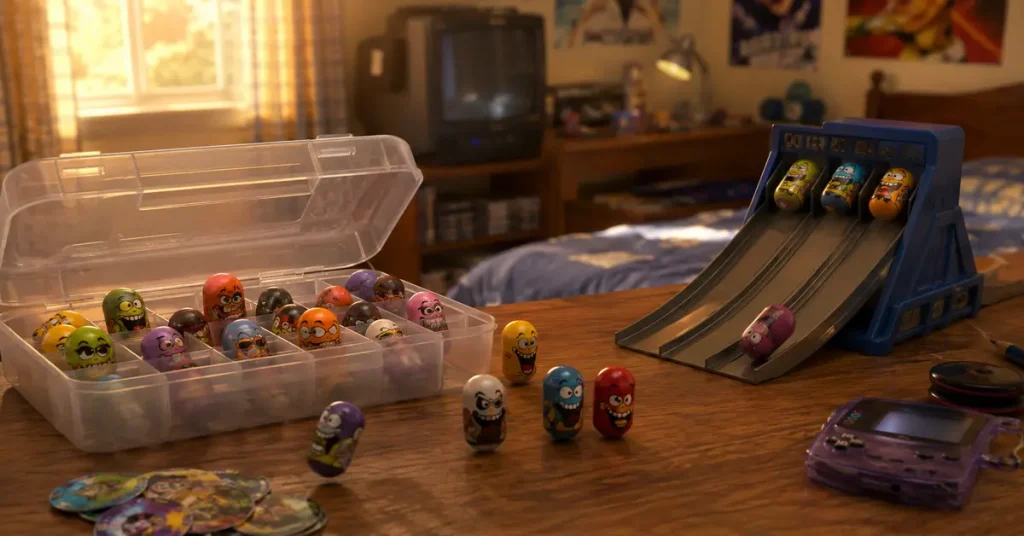
The basic idea combined a decorated plastic shell with an internal moving weight. Gravity shifted the balance, producing the unpredictable wobble that made races and tricks possible without batteries.
That mix of collecting and physical play distinguished the toy from static mini figures.
How the original series developed
Collector histories generally describe four numbered standard series followed by Bean Bodz as Series 5. Teams, cases, finishes and pack formats changed as the line expanded.
Online totals often repeat without showing the original source. I use them as research leads and confirm individual entries against inserts or documented packaging.
Our Mighty Beanz checklist keeps the original era separate from the later Series 1 releases.
Teams, numbers and character art
Numbering and team groupings gave children a practical way to track what they owned. The art covered animals, occupations, monsters, sports and humorous characters.
A number should always be stored with the era because later lines restarted or extended their own systems. Artwork is useful, but worn paint can hide the feature that separates two designs.
Collector inserts are valuable records. Store or scan them instead of relying only on memory.
Collector cases and storage
Color-coded and branded cases are closely associated with the early collecting experience. A case can help establish context, but loose beans may have been moved between cases over the years.
Inspect hinges, sleeves, fasteners, odors, cracks and fading. Do not assume that a filled case is an untouched original set.
For long-term care, use clean divided storage away from sunlight and heat. Keep printed surfaces from rubbing together.
Original tracks and playsets
Mighty Beanz tracks turned the moving internal weight into races, jumps and collisions. Track-exclusive beans and missing components can complicate identification.
When buying a used set, compare the pieces with instructions or box photographs. Check launchers, supports, connectors and finish parts rather than counting only the largest sections.
The Mighty Beanz track guide covers compatibility, setup and used-set inspection.
Bean Bodz and other expansions
Bean Bodz paired the bean concept with wearable or fitted body components. Accessories can become separated, so the bean and Bodz piece should be recorded individually before they are treated as a complete pair.
Promotional and licensed releases also sit outside a simple standard-series checklist. Their distribution history may require package evidence or a specialist guide.
Do not force every unusual early-2000s item into the nearest numbered series.
How to identify an early-2000s example
Start with the copyright and manufacturer marks, then record the number, artwork, shape and packaging. Compare those details with a source from the same era.
Photograph both sides before cleaning. A faint mark can be improved through lighting and camera angle without scraping the shell.
Use the full method in How to Identify Mighty Beanz when a listing mixes years or uses only the word vintage.
Condition problems common in played-with collections
Paint rubs, scratches, fading, cracks and weak movement are normal concerns because the toys were designed to race and collide. Describe each issue rather than applying a vague grade.
Cases may add surface wear when beans are stored tightly together. Moisture and strong cleaners can damage printing or leave residue.
Repairs and repainting should be disclosed. A restored display piece is different from an untouched collector example.
Buying original Mighty Beanz today
Request photographs of the exact items, not stock images. Ask for the reverse, marks, cases, inserts, damaged pieces and a complete contents list.
Mixed lots can be enjoyable starter collections, but they may combine 2002, 2010, 2018 and licensed products. Price them as mixed until the contents are identified.
For market research, follow the Mighty Beanz value guide and compare recent completed sales rather than dramatic asking prices.
Why the original line still attracts collectors
The early line combines recognizable Y2K toy design with a simple mechanism that remains fun to demonstrate. Character variety gives collectors several ways to specialize.
Some people rebuild a childhood collection. Others focus on one series, team, case color, track or licensed set. None of those goals requires buying every release.
A clear collection boundary and a written budget make the hobby easier to enjoy and document.
Frequently asked questions
Q: When did original Mighty Beanz come out?
A: Mighty Beanz launched in Australia in 2002 and reached the United States in 2003 according to historical accounts. Copyright dates on individual products can vary.
Q: Who made original Mighty Beanz?
A: The toy line was created by Moose Enterprises in Melbourne, Australia, now known as Moose Toys.
Q: How are original Mighty Beanz different from 2010 versions?
A: They belong to different release periods with different artwork, teams, packs and numbering context. Check copyright marks and release-specific packaging rather than relying on appearance alone.
Q: Are all early-2000s Mighty Beanz rare?
A: No. Age does not make every item rare. Rarity depends on the exact release and documented distribution.
Q: What are Bean Bodz?
A: Bean Bodz expanded the concept by pairing beans with body-style components. Because parts can be separated, confirm that the bean and accessory belong together.
Q: Can original Mighty Beanz still be used on tracks?
A: Many functioning beans can still wobble and race, but inspect old toys and tracks for cracks, sharp damage and loose parts before play. Follow age and safety guidance for the exact set.
Research sources
Historical context was checked against Moose Toys’ company history, contemporary release reporting and collector references. Marketplace examples are treated as changing evidence, not fixed prices. Claims that could not be confirmed from release-specific material are labeled as uncertain.